

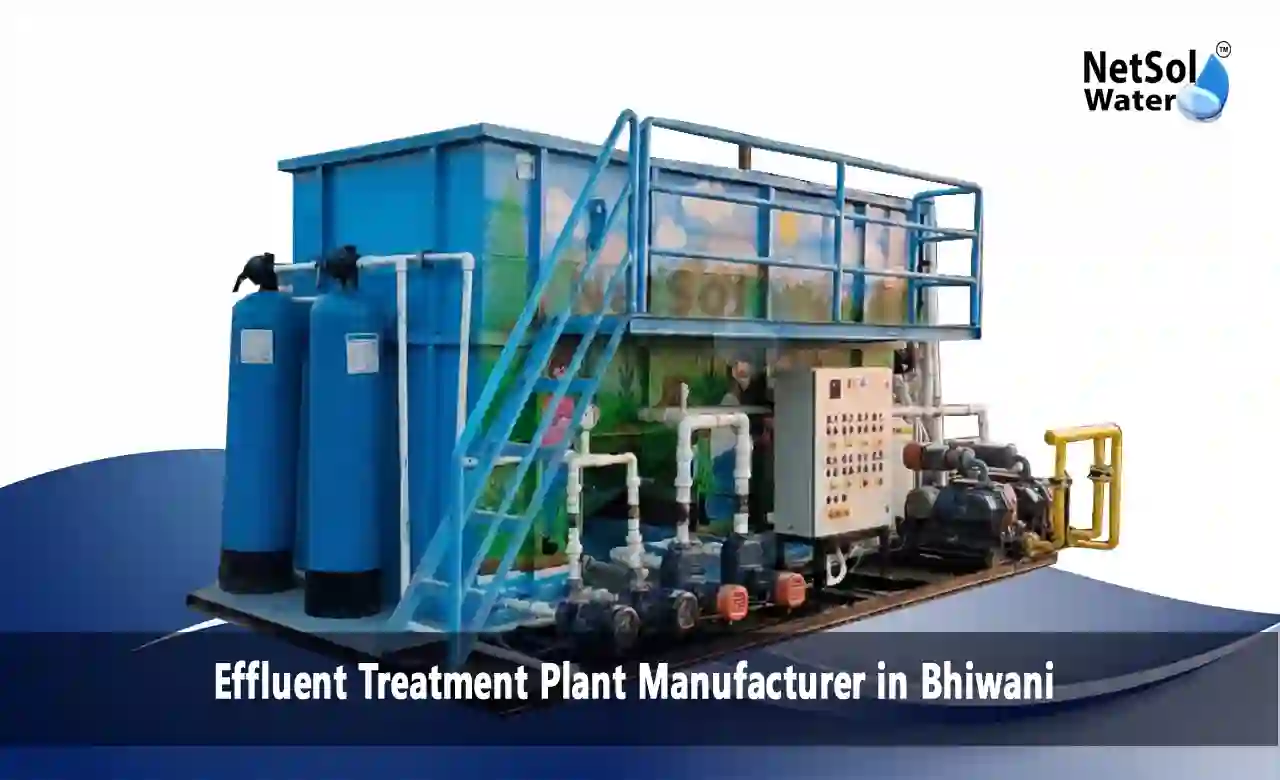
Effluent Treatment Plant Manufacturer in Bhiwani
Bhiwani's industrial base has grown quietly but steadily. Textile mills, dyeing and printing operations, chemical processors, food manufacturing units, metal fabrication shops, and dairy facilities now operate across the district and its surrounding areas. Each of these industries generates wastewater - and that wastewater is nothing like domestic sewage.
Industrial effluent from a dyeing unit carries dyes, chemicals, and high COD that standard biological treatment cannot handle alone. Chemical processing plants produce wastewater with pH extremes and specific toxic compounds. Metal finishing units discharge heavy metals. Food processors generate high-BOD effluent with fats and oils. Each requires a fundamentally different treatment approach.
The Haryana State Pollution Control Board (HSPCB) is actively enforcing compliance across the state. Bhiwani industries that have not yet installed a compliant ETP are operating at increasing regulatory risk. This guide covers what you need to know to address that risk properly.
Why Industrial Effluent in Bhiwani Demands Specialized Treatment
The fundamental difference between sewage and industrial effluent is the composition of pollutants. Domestic sewage is predominantly organic - biodegradable matter that standard biological treatment handles effectively. Industrial effluent from Bhiwani's factories can contain:
• Synthetic dyes and pigments that resist biological degradation - requiring chemical oxidation or adsorption processes
• Heavy metals like chromium, nickel, lead, and zinc from metal finishing operations - requiring chemical precipitation
• pH extremes from chemical manufacturing - requiring careful neutralization before biological treatment
• High COD and colour from textile processes - requiring physico-chemical pre-treatment before any biological stage
• Pharmaceutical compounds and residual solvents - requiring Advanced Oxidation Processes (AOP)
• High BOD and fats from dairy and food processing - requiring aerobic biological treatment with proper sludge management
Designing an ETP without first characterizing the specific effluent profile of the industry it will serve is the most common - and most expensive - mistake in industrial wastewater management.
Industries in Bhiwani That Need an Effluent Treatment Plant
1. Textile and Dyeing Units
Bhiwani's textile sector is among the largest generators of difficult-to-treat effluent in the region. Dyeing wastewater has high colour, high TDS, and complex chemical compounds that resist biological breakdown. Treatment requires a combination of coagulation-flocculation for colour removal, biological treatment for BOD reduction, and final filtration. HSPCB has made ZLD mandatory for textile dyeing and printing operations in Haryana.
2. Chemical Manufacturing Plants
Chemical processors in Bhiwani generate effluent with specific toxic compounds, pH extremes, and dissolved chemicals that require neutralization and specialized treatment before any discharge. The variability of chemical effluent requires equalization tanks capable of handling both composition and volume fluctuations.
3. Food and Dairy Processing Facilities
Food processing and dairy operations generate high-BOD wastewater containing fats, oils, proteins, and suspended organic solids. Untreated, this effluent depletes dissolved oxygen in receiving water bodies and causes severe ecological damage. Biological treatment - aerobic for dissolved organics, and a dissolved air flotation (DAF) system for fats and oils - is the standard approach.
4. Metal Fabrication and Electroplating Units
Electroplating and metal finishing operations in Bhiwani discharge wastewater containing hexavalent chromium, nickel, zinc, and other heavy metals that are toxic at very low concentrations. Chemical precipitation - reducing hexavalent chromium to trivalent and then precipitating metals as hydroxides - must precede any biological stage.
5. Pharmaceutical Manufacturers
Pharmaceutical facilities generate wastewater containing active pharmaceutical ingredients (APIs), solvents, and residual compounds. Advanced Oxidation Processes including ozone, UV, or Fenton reaction are required to break down complex pharmaceutical compounds that biological systems cannot degrade.
How an Effluent Treatment Plant in Bhiwani Works
1. Screening and Equalization
Raw effluent passes through bar screens to remove large solids, then enters an equalization tank that balances flow rate and concentration variations across production shifts. This step is critical for Bhiwani industries where production schedules vary significantly - delivering consistent input to downstream treatment stages.
2. Primary Physico-Chemical Treatment
pH correction uses acid or alkali dosing to bring the effluent to a range where downstream treatment works effectively. Coagulants and flocculants cause fine particles and colloidal matter to aggregate and settle. A clarifier removes the settled sludge. For textile effluent, this stage removes the bulk of colour and COD. For metal finishing wastewater, it precipitates heavy metals.
3. Secondary Biological Treatment
Aeration tanks introduce air and provide residence time for microorganisms to break down dissolved and suspended organic matter. Biological treatment significantly reduces BOD and COD, bringing the effluent within reach of HSPCB discharge limits. For high-strength effluent, anaerobic pre-treatment precedes the aerobic stage to reduce organic load and improve overall efficiency.
4. Tertiary Treatment and Final Polishing
Sand filtration, activated carbon filtration, and in some configurations membrane filtration remove residual suspended solids, trace colour, and organic compounds. This stage brings the effluent to HSPCB discharge standards. For ZLD systems, RO membranes recover clean water from the tertiary effluent for recycling back into the industrial process.
5. Sludge Management
ETP sludge is processed through thickeners, sludge drying beds, or filter press units to reduce volume and water content. Properly classified and processed sludge is disposed of at HSPCB-designated facilities. Sludge management is a compliance requirement, not an operational afterthought - HSPCB inspections specifically check sludge handling records.
Zero Liquid Discharge Systems in Bhiwani
HSPCB and CPCB have mandated ZLD for several industry categories in Haryana. For Bhiwani's textile dyeing sector - which is subject to this mandate - ZLD is not optional. ZLD systems recover treated water through RO membranes and further process the RO concentrate through evaporation or crystallization, leaving only dry solid waste for disposal.
ZLD systems have higher capital and operating costs than conventional ETPs, but for mandated industries, the alternative is operating without compliance - which carries closure risk. For industries in water-scarce Bhiwani, the water recovery benefit of ZLD also makes it economically worthwhile beyond pure compliance.
About NetSol Water
NetSol Water is an ISO certified manufacturer of Effluent Treatment Plants with installations in Haryana, Uttar Pradesh, Delhi NCR, Rajasthan, and multiple other states. Our engineering team has designed and commissioned ETPs for textile mills, food processors, dairy facilities, chemical plants, pharmaceutical manufacturers, and metal finishing operations.
Our process always begins with effluent characterization. We sample and analyze your specific effluent before any design work begins. The system we propose is engineered for your actual pollutant profile, your production volume, and your regulatory requirements.
• Detailed effluent characterization study before any design work begins
• Technology selection matched to your specific effluent profile and HSPCB requirements
• ZLD capability for industries under HSPCB zero-discharge mandates
• In-house installation team - no critical subcontracting
• AMC support with scheduled maintenance and emergency breakdown response
• Assistance with HSPCB Consent to Establish and Consent to Operate applications
Frequently Asked Questions (FAQ)
Q: What industries in Bhiwani are required to install an ETP?
A: Textile and dyeing units, chemical manufacturers, food and dairy processors, metal fabrication and electroplating units, pharmaceutical manufacturers, leather units, and paper mills in Bhiwani are required to operate a functional ETP under HSPCB norms. Industries generating trade effluent above threshold volumes must have a compliant system in place.
Q: How does an Effluent Treatment Plant in Bhiwani handle textile dyeing wastewater?
A: Textile dyeing wastewater has high colour, elevated COD, and chemical compounds that resist biological breakdown. An ETP for textile units in Bhiwani uses a combination of physico-chemical treatment for colour and COD reduction, biological treatment for organic degradation, and advanced filtration for final polishing - often with ZLD integration as mandated by HSPCB.
Q: What is ZLD and which Bhiwani industries must comply?
A: Zero Liquid Discharge means no wastewater is discharged outside the plant boundary. All water is treated and recycled. HSPCB has made ZLD mandatory for textile dyeing, distilleries, sugar mills, and tanneries in Haryana, including Bhiwani. ZLD systems must be designed from scratch - retrofitting is significantly more expensive.
Q: How much does an ETP cost in Bhiwani?
A: ETP cost in Bhiwani depends on industry type, effluent volume, contamination profile, treatment technology, and ZLD requirements. Textile and chemical ETPs cost more than food processing systems due to complex pollutants. NetSol Water provides detailed cost proposals after a site visit and effluent characterization study.
Q: What happens if a Bhiwani industry does not install an ETP?
A: Non-compliant industries in Bhiwani face HSPCB show-cause notices, monetary penalties, production closure orders, and NGT proceedings. Repeated violations can result in permanent closure. Beyond regulatory consequences, untreated discharge causes groundwater contamination, soil degradation, and community health impacts that create long-term liability.
Q: How long does ETP installation take in Bhiwani?
A: A standard ETP project in Bhiwani takes 10 to 16 weeks from initial effluent characterization to commissioning. Timeline varies based on plant capacity, civil construction requirements, and technology complexity. NetSol Water provides a fixed project timeline in writing before any work begins.
Q: Does NetSol Water help with HSPCB documentation for ETPs in Bhiwani?
A: Yes. NetSol Water assists clients with HSPCB Consent to Establish and Consent to Operate applications, helping ensure the ETP design meets regulatory requirements from the outset. This prevents costly design modifications after installation that result from non-compliant initial designs.
Q: Can an ETP recover and recycle water for industrial reuse in Bhiwani?
A: Yes, especially in ZLD-configured systems. After multi-stage ETP treatment, an integrated RO system recovers clean water that can be recycled back into the industrial process. In water-scarce Bhiwani, this water recovery capability makes ZLD economically sensible even for industries where it is not yet mandated.