

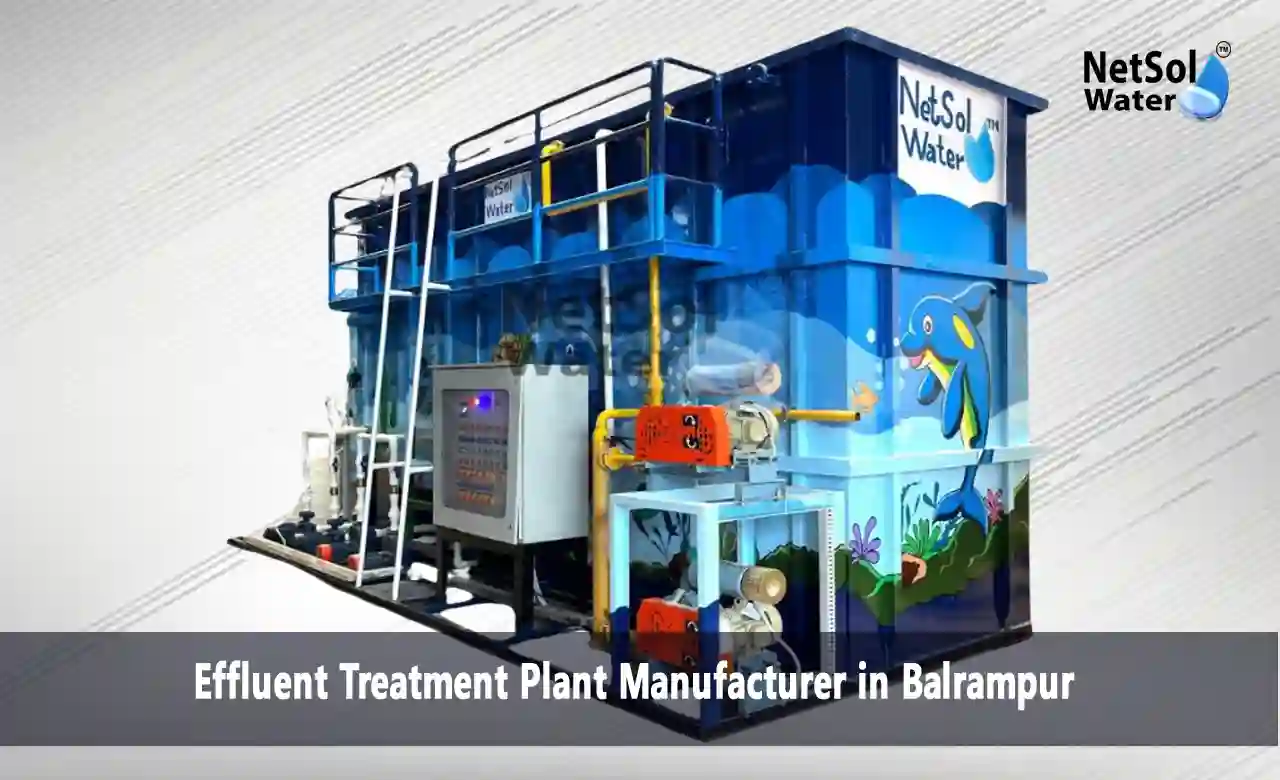
Effluent Treatment Plant Manufacturer in Balrampur
Balrampur, located in northeastern Uttar Pradesh bordering Nepal, is home to a fast-growing cluster of rice mills, sugar processing units, agro-based industries and food processing facilities. As industrial activity in the district expands, so does the responsibility to manage wastewater responsibly - and the obligation to comply with the effluent discharge standards set by the Uttar Pradesh Pollution Control Board (UPPCB) and the Central Pollution Control Board (CPCB).
Industries that discharge untreated wastewater can face plant shutdowns, heavy fines and legal notices under the Water (Prevention and Control of Pollution) Act, 1974. An Effluent Treatment Plant (ETP) is not just a compliance tool - it is a long-term investment in operational continuity, water reuse, and environmental responsibility.
What is an Effluent Treatment Plant?
An Effluent Treatment Plant is an industrial wastewater system that removes chemical, biological, and physical contaminants from manufacturing effluent - ensuring the treated water meets CPCB and UPPCB discharge standards before it is released into the environment or reused within the plant.
About Netsol Water
We have designed and installed ETP systems across Uttar Pradesh, Chhattisgarh and neighbouring states, serving industries in food processing, textiles, pharmaceuticals and chemical manufacturing. As a trusted Effluent Treatment Plant Manufacturer in Uttar Pradesh, our systems are engineered to meet CPCB Schedule VI discharge norms and are built for long-term, low-maintenance performance.
Why Industries in Balrampur Need an Effluent Treatment Plant
Industrial wastewater is fundamentally different from household sewage. It can contain heavy metals, synthetic dyes, oils and greases, high BOD/COD loads, suspended solids, and toxic organic compounds - none of which can be safely discharged into rivers, canals, or agricultural land without treatment.
Industries in Balrampur that generate effluent requiring an ETP:
• Rice mills: Rice mills and paddy processing units
• Sugar mills: Sugar and molasses processing plants - produce highly coloured, high-COD effluent
• Food & dairy: Food processing and dairy units - generate fats, oils, and organic waste loads
• Textile units: Textile and dyeing units - produce dye-laden, chemically complex effluent
• Chemical plants: Chemical processing plants - generate effluent with toxic dissolved solids
• Pharma & packaging: Pharmaceutical and packaging industries requiring tertiary treatment
A properly designed ETP reduces BOD, COD, TSS, and heavy metal concentrations to within permissible UPPCB discharge limits. Treated water can also be recycled for cooling, cleaning, and other non-potable uses - reducing freshwater consumption and operational costs.
How an Effluent Treatment Plant Works - Step by Step
1. Screening and Collection: Raw wastewater passes through bar screens to remove large solids, then flows into an equalisation tank to balance flow rate and pollutant load.
2. Primary Treatment (Physical): Sedimentation and clarification remove suspended solids. Chemical coagulants and flocculants bind fine particles into larger flocs for easy removal.
3. Secondary Treatment (Biological): Aerobic or anaerobic biological processes - activated sludge, MBBR, or SBR - break down dissolved organic matter, significantly reducing BOD and COD.
4. Tertiary Treatment (Polishing): Sand filtration, activated carbon, or membrane filtration removes residual colour, odour, and trace contaminants - producing water suitable for reuse or safe discharge.
5. Sludge Management: Settled sludge is thickened, dewatered using a filter press, and disposed of as per CPCB solid waste norms - or repurposed as soil conditioner where applicable.
ETP Capacity and Estimated Cost in Balrampur
ETP cost depends on daily effluent volume, wastewater characteristics, treatment technology, and civil construction requirements. Below is a general pricing reference for industries in Balrampur and nearby districts including Shravasti, Gonda, and Bahraich.
|
Capacity |
Suitable For |
Est. Cost |
Key Components |
|
1 – 25 KLD (Small scale) |
Small food units, workshops, dairy, packaging |
INR6 lakh – INR20 lakh |
Equalisation tank, chemical dosing, clarifier, biological unit |
|
50 – 100 KLD (Medium scale) |
Textile, pharma, mid-size food processing |
INR30 lakh – INR80 lakh |
Aeration tank, sludge management, tertiary filtration |
|
200 KLD+ (Large scale) |
Sugar mills, large chemical plants, industrial estates |
INR1 crore – INR4 crore+ |
Multi-stage treatment, sludge dewatering, membrane filtration, ZLD options |
Note: Costs above are indicative estimates. Final pricing depends on site assessment, wastewater analysis, and specific treatment requirements. Contact Netsol Water for a detailed quotation.
What Factors Affect the Cost of an ETP?
• Wastewater characteristics: Effluent with heavy metals, synthetic dyes, or pharmaceutical compounds requires additional treatment stages and specialised chemicals - increasing both capital and operating costs.
• Treatment technology: Advanced technologies such as MBR, RO, or ZLD systems are more effective but also more capital-intensive than conventional systems.
• Plant capacity: Higher daily volumes require larger tanks, more powerful blowers and pumps, and greater chemical dosing infrastructure.
• Automation level: SCADA-based monitoring, PLC controls, and remote alert systems improve efficiency and reduce manpower requirements, but add to upfront cost.
• Civil construction: Site conditions, soil type, available space, and existing infrastructure significantly influence the cost of constructing tanks and pipelines.
How to Choose the Right ETP for Your Industry
Choosing the right ETP begins with a lab analysis of your wastewater - measuring pH, BOD, COD, TSS, TDS and the presence of specific contaminants like heavy metals or dyes. This analysis, combined with your average daily effluent volume, allows our engineers to design a system matched to your exact needs.
Beyond the current requirement, a well-designed ETP should also account for:
• Future production expansion - design for 20–30% higher capacity
• Available land for civil structures
• UPPCB discharge standards applicable to your industry category
• Water reuse goals - whether partial or Zero Liquid Discharge (ZLD)
Getting the design right from the start avoids costly retrofits, compliance failures, and operational downtime.
Frequently Asked Questions
Q: What is the cost of an ETP in Balrampur?
A: ETP costs in Balrampur range from INR6 lakh for a small 1 KLD unit to INR4 crore or more for a large 200 KLD plant. The final cost depends on daily wastewater volume, contaminant type, the treatment technology selected, and civil construction requirements.
Q: Is an ETP legally required for industries in Balrampur?
A: Yes. Under the Water (Prevention and Control of Pollution) Act, 1974, industries generating wastewater are legally required to treat their effluent to meet UPPCB and CPCB discharge standards. Non-compliance can result in plant closure notices, fines, and criminal liability.
Q: Which industries in Balrampur need an ETP?
A: Rice mills, sugar processing plants, food and dairy units, textile and dyeing units, chemical manufacturing facilities, and pharmaceutical companies in Balrampur and nearby districts (Shravasti, Gonda, Bahraich) are required to install ETPs.
Q: How long does ETP installation take?
A: Small ETPs (1–25 KLD) typically take 4 to 8 weeks. Medium systems (50–100 KLD) take 8 to 16 weeks. Large plants (200 KLD+) may require 3 to 6 months, depending on civil construction complexity and commissioning.
Q: Can treated ETP water be reused in the plant?
A: Yes. With tertiary treatment (sand filtration + activated carbon + UV or RO), treated effluent can be reused for cooling towers, floor washing, boiler make-up water, and gardening. Full ZLD systems can recover 80–95% of water for reuse.
Q: Does Netsol Water provide maintenance support in Balrampur?
A: Yes. Netsol Water provides installation, commissioning, operator training, annual maintenance contracts (AMC), and spare parts support for all ETP systems we supply in Balrampur and surrounding areas of Uttar Pradesh.
Partner with Netsol Water for ETP Solutions in Balrampur
Managing industrial growth responsibly means treating wastewater before it becomes a problem - for your plant, your community, and your compliance record. At Netsol Water, we take the complexity out of ETP selection and installation. From the first wastewater analysis to final commissioning and operator training, we manage the entire process so your team can focus on running the plant.
Whether you need a compact 1 KLD system for a small processing unit or a multi-stage 500 KLD plant for a large industrial facility, our engineers will design a solution that fits your effluent profile, your budget, and your compliance timeline.
Get a Free ETP Consultation for Your Balrampur Industry
Tell us your wastewater volume and industry type - our engineers will recommend the right system and provide a detailed cost estimate within 48 hours.
Call: +91-9650608473 | Email: enquiry@netsolwater.com