

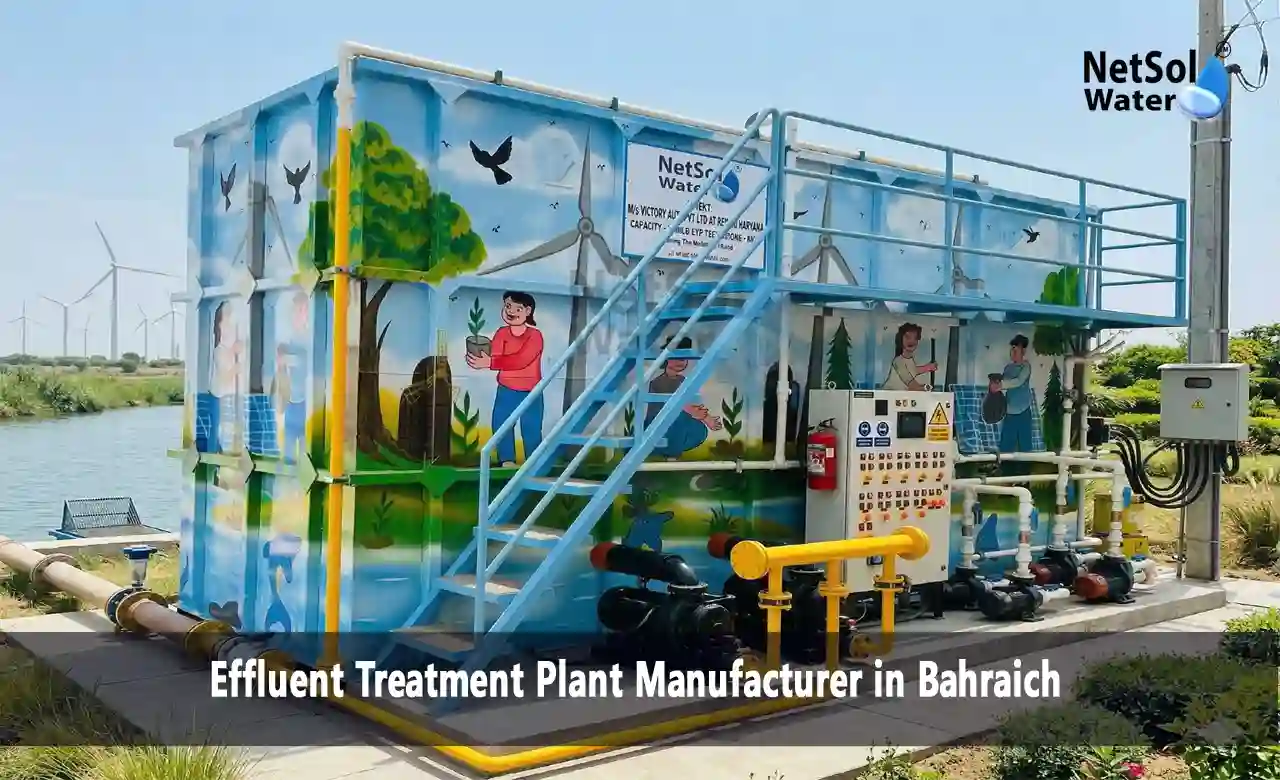
Effluent Treatment Plant Manufacturer in Bahraich
Industries across Bahraich district, Uttar Pradesh are under increasing pressure from the UP Pollution Control Board (UPPCB) and the Central Pollution Control Board (CPCB) to treat their effluent before discharging it into waterways or land. Non-compliance can mean hefty penalties, forced shutdowns and reputational damage that is hard to recover from. Choosing the right effluent treatment plant manufacturer in Bahraich is therefore not just a technical decision - it is a business-critical one.
Netsol Water has spent over 15 years designing, building, and maintaining effluent treatment plants across Uttar Pradesh. With more than 1200 successful ETP installations to our name - spanning textile units, food processing facilities, pharmaceutical plants and chemical industries - we bring deep local knowledge, UPPCB documentation expertise and a hands-on engineering team to every project in the Bahraich region.
What Is an Effluent Treatment Plant and Why Does Your Industry Need One?
An effluent treatment plant is an industrial wastewater treatment system that removes harmful contaminants - including suspended solids, organic matter, heavy metals, dyes, and pathogens - from process water before it is safely discharged into the environment or reused within the facility. Under the Environment Protection Act 1986 and CPCB General Standards, industrial units in India must ensure their discharge meets prescribed limits for BOD (Biochemical Oxygen Demand), COD (Chemical Oxygen Demand), TSS (Total Suspended Solids), and pH.
For industries in Bahraich - particularly those in textiles, sugar processing, food manufacturing, and chemicals - operating without a functioning ETP is not an option. The National Green Tribunal (NGT) has consistently issued closure orders to non-compliant units across Uttar Pradesh, and UPPCB inspections have intensified in recent years.
Why Choose Netsol Water as Your ETP Manufacturer in Bahraich?
We have worked with industries from Bahraich, Gonda, Shravasti, and Balrampur, and we understand what makes effluent treatment in this region different from a generic plant design. As a leading Effluent Treatment Plant Manufacturer in Uttar Pradesh, we design systems that address local challenges such as raw water quality, seasonal flow variations, the nature of industrial clusters in eastern UP, and the specific discharge standards set by the UPPCB for the Ghaghra river basin. All these factors shape how we engineer each plant to ensure reliable performance and full regulatory compliance.
1. Proven Engineering With Real Results
Our treatment designs are not templates. Before we propose a system, our engineers collect wastewater samples from your site, run lab analysis for BOD, COD, TSS, oil and grease, and heavy metal content, and then size each treatment stage to match your actual waste profile. A textile unit we served in Faizabad district saw its COD reduced from 1,800 mg/L to below 250 mg/L - well within CPCB discharge norms - within six weeks of commissioning.
2. Local Support and Rapid Response
A plant that sits idle is a liability. Our Lucknow-based service team covers Bahraich and surrounding districts with a 24-hour response commitment for breakdown calls. We stock critical spares - blower membranes, diffuser sets, dosing pump heads, and filter media - in our regional depot so that repair turnaround rarely exceeds one working day.
3. UPPCB Compliance and Documentation Handled for You
Many of our clients come to us after struggling with the permit application process. We prepare the complete Consent to Establish (CTE) and Consent to Operate (CTO) documentation for UPPCB, including site layout drawings, effluent quality reports, operation and maintenance plans, and the environmental statement. Our compliance team has successfully obtained approvals for over 180 industrial units across Uttar Pradesh.
4. Long-Term Cost Engineering
We specify pumps, membranes, and electrical systems with whole-life cost in mind, not just installation price. Choosing energy-efficient blowers over cheaper alternatives, for instance, typically saves a 50 KLD plant owner between ?1.5 lakh and ?3 lakh per year in electricity costs. Our clients consistently report that their total cost of ownership over five years is lower with Netsol Water than with cheaper initial quotes from other suppliers.
Types of Effluent Treatment Plants We Supply in Bahraich
Different industries, different sites, and different budgets call for different plant configurations. Netsol Water supplies three main plant types, and in many cases our engineers recommend a hybrid approach that combines elements from more than one.
1. Modular Effluent Treatment Plants
Modular ETPs are pre-engineered systems assembled from standardised treatment units - coagulation tanks, aeration chambers, clarifiers, and filter units - that arrive at site ready to connect. Because most fabrication happens in our workshop rather than on site, installation time drops significantly. For a 30 KLD modular plant, we typically commission within four to six weeks of site handover. Modular systems are ideal for industries that anticipate capacity expansion, because additional modules can be added without rebuilding the core plant.
2. Packaged Effluent Treatment Units
Packaged plants are compact, factory-built units designed to treat low to medium flow volumes - generally between 1 KLD and 25 KLD. They arrive as a single skid-mounted assembly with all tanks, blowers, control panels, and piping pre-installed. Because they require minimal civil work, packaged units are the fastest and most cost-effective solution for small industries, hotels, food courts, and isolated facilities in Bahraich district. Operators with no prior wastewater treatment experience can run them after a single day of training.
4. Civil Effluent Treatment Plants
For large factories, industrial estates, and common effluent treatment plants (CETPs) serving multiple units, we design and build fully civil ETP structures. These are reinforced concrete systems engineered specifically for the site, with treatment capacities ranging from 200 KLD to over 5,000 KLD. Civil plants can incorporate Zero Liquid Discharge (ZLD) modules, membrane bioreactors (MBR), and advanced tertiary polishing stages that enable treated water to be recycled back into the production process - a requirement increasingly specified by the NGT for water-stressed regions.
How an Effluent Treatment Plant Works
Understanding the treatment sequence helps you monitor plant performance and communicate with your operators. A properly designed ETP moves effluent through a series of stages, each targeting a different category of contaminant.
Stage 1 - Screening and Grit Removal
Coarse screens remove large floating debris - plastic, fabric, food scraps, packaging - that would otherwise damage pumps and block pipework. Grit chambers slow the flow so sand, grit, and fine particles settle out by gravity. This stage protects all downstream equipment and extends the service life of pumps and blowers significantly.
Stage 2 - Equalization
Industrial effluent does not flow at a constant rate or concentration. Production shifts, cleaning cycles, and batch discharge events create spikes that would overwhelm a treatment plant sized for average conditions. Equalization tanks buffer these peaks, storing surge flows and blending high-concentration batches with lower-strength effluent to produce a steady, manageable feed to the downstream treatment stages.
Stage 3 - Primary Treatment (Chemical Coagulation and Settling)
Chemical coagulants such as alum or ferric chloride are dosed into the equalized effluent to destabilize suspended particles and colloidal matter. The particles aggregate into larger flocs that settle rapidly in primary clarifiers. This stage removes 50 to 70 percent of TSS and a significant portion of BOD in a single step. For industries like textiles and pharmaceuticals, pH adjustment using lime or sulphuric acid also happens at this stage to bring the effluent within the range suitable for biological treatment.
Stage 4 - Biological Treatment
Biological units use communities of naturally occurring microorganisms to break down dissolved organic matter - the material that drives BOD and COD readings up. The most common biological processes we deploy in Bahraich include activated sludge systems (ASP), Moving Bed Biofilm Reactors (MBBR), and Sequencing Batch Reactors (SBR). Each has advantages depending on waste strength, available space, and the desired effluent quality. MBBR systems, for example, handle variable loads better than conventional ASP and require less space, making them well-suited for medium-sized industrial sites in the region.
Stage 5 - Tertiary Treatment and Disinfection
The tertiary stage polishes the biologically treated effluent to meet discharge standards or enable reuse. Sand filters and activated carbon filters remove residual suspended solids and trace organics. Chlorination or UV disinfection eliminates pathogens. For industries targeting ZLD or process water recycling, we add reverse osmosis (RO) and evaporation systems at this stage. Treated water from a well-designed tertiary stage can meet CPCB General Standards, Schedule VI, and in some cases be clean enough for toilet flushing, cooling tower makeup, or garden irrigation within the factory premises.
Industries We Serve With ETP Solutions in Bahraich and Uttar Pradesh
1. Textile and Dyeing Units
Textile effluent is among the most challenging to treat. Dye-laden wastewater from weaving, dyeing, and finishing operations carries high colour, elevated COD (often 1,500 to 3,000 mg/L), and variable pH. Our treatment design for textile units typically combines chemical coagulation for colour removal, extended aeration for COD reduction, and multi-media filtration for final polishing. We have worked with power loom clusters and dyeing units in eastern UP where UPPCB colour norms are particularly strictly enforced.
2. Food and Beverage Processing
Food processing plants in Bahraich - producing sugar, rice, dairy products, and packaged foods - generate effluent that is high in BOD, suspended solids, and fats, oils, and grease (FOG). Our designs for these units prioritise dissolved air flotation (DAF) for FOG removal, followed by anaerobic pre-treatment to handle the high organic load before aerobic polishing. Biogas recovered during anaerobic digestion can often be used to offset the plant's own energy consumption.
3. Pharmaceutical and Chemical Plants
Pharmaceutical and specialty chemical units often produce effluent containing toxic compounds, variable pH, and trace pharmaceutical residues that resist conventional biological treatment. We design dedicated neutralisation sumps, chemical oxidation units (using Fenton's reagent or ozone where necessary), and activated carbon adsorption stages to address these specific challenges. Hazardous sludge from these units is dewatered and disposed of through UPPCB-authorised treatment, storage, and disposal facilities (TSDF).
4. Hotels, Hospitals, and Commercial Complexes
Non-industrial users in Bahraich are also subject to effluent discharge norms, particularly those discharging to municipal drains or natural water bodies. Our packaged ETP units are ideal for hotels, private hospitals, and large commercial complexes. They require minimal operator attention, have a small footprint, and can be installed within a few weeks - making them a practical compliance solution for commercial operators.
ETP Capacity Range and Cost Guide for Bahraich
We size plants from 1 KLD to 10MLD and above. Capacity selection depends on your current discharge volume, anticipated production growth over the next five years, and the regulatory consent conditions issued by UPPCB.
1. Small-Scale ETP (1 to 25 KLD)
Small packaged plants for single units, small factories, hotels, or food stalls. Installed cost typically ranges from Rs.5 lakh to Rs.20 lakh depending on wastewater complexity and required treatment depth. Civil work is minimal - most installations are complete within three to four weeks.
2. Medium-Scale ETP (25 to 200 KLD)
Medium modular or semi-civil plants for medium-sized factories, processing units, and industrial clusters. Installed cost typically ranges from Rs.20 lakh to Rs.99 lakh. These systems include automation controls, online monitoring instruments, and sludge dewatering equipment. They are typically commissioned within eight to twelve weeks.
3. Large-Scale ETP (200 KLD and above)
Large civil plants, CETPs, and ZLD systems for industrial estates, large manufacturers, and multi-unit clusters. Installed cost ranges from Rs.99 lakh upwards, depending on treatment technology, civil complexity, and whether ZLD or water recycling modules are included. These projects are designed and delivered over a phased timeline of three to twelve months.
These figures are indicative - every site is different. The final cost depends on your specific wastewater characteristics, site conditions, civil requirements, level of automation, and the discharge standards you need to meet. We provide detailed, itemised quotations after conducting a free site survey and laboratory analysis of your effluent.
UPPCB and CPCB Regulatory Compliance
Navigating the UPPCB approval process can be time-consuming and frustrating without the right expertise. We have been through it hundreds of times, and we manage the entire compliance journey for our clients - from the initial Consent to Establish application through to commissioning verification and ongoing monitoring support.
1. Consent to Establish (CTE)
Before construction begins, UPPCB requires a CTE that demonstrates your proposed plant will meet discharge standards. We prepare all supporting documents - site plans, process flow diagrams, equipment specifications, and projected effluent quality data - and submit on your behalf. Our success rate for first-time CTE approvals is above 95 percent.
2. Consent to Operate (CTO) and Renewal
Once the plant is commissioned and effluent quality verified, we prepare and submit your CTO application with the required laboratory test reports. We also manage annual CTO renewals and help clients respond to UPPCB inspection queries or notices.
3. Online Monitoring and Record Keeping
UPPCB now requires large-category industries to install Continuous Online Monitoring Systems (CEMS/CETP online monitoring) that transmit real-time effluent quality data to the UPPCB server. Netsol Water supplies, installs, and commissions these monitoring systems and ensures your data transmission is compliant with the current UPPCB protocol.
Frequently Asked Questions About Effluent Treatment Plants in Bahraich
Q: How much does an effluent treatment plant cost in Bahraich?
A: The cost depends on capacity, wastewater type, and the level of treatment required. Small packaged ETPs for 1 to 25 KLD typically cost Rs.5 lakh to Rs.20 lakh. Medium plants (25 to 200 KLD) range from Rs.20 lakh to Rs.99 lakh. Large civil systems above 200 KLD start at Rs.99 lakh and can go significantly higher for ZLD configurations. We provide free, detailed quotations after a site visit.
Q: How long does it take to install an ETP in Bahraich?
A: Small packaged plants can be installed and commissioned within three to four weeks. Medium modular systems typically take eight to twelve weeks. Large civil plants are phased over three to twelve months depending on size and complexity.
Q: What industries in Bahraich are required to have an ETP?
A: Under UPPCB regulations and the Environment Protection Act, industries classified as Red or Orange category must install an ETP. In Bahraich, this commonly includes textile and dyeing units, sugar mills, rice mills, pharmaceutical manufacturers, chemical plants, slaughterhouses, and large food processing units. Hotels and hospitals above a certain scale also require wastewater treatment systems.
Q: What is the difference between an STP and an ETP?
A: A Sewage Treatment Plant (STP) treats domestic wastewater - from toilets, kitchens, and bathrooms - which is primarily biological in nature. An Effluent Treatment Plant (ETP) treats industrial process wastewater, which may contain chemicals, dyes, heavy metals, or toxic compounds in addition to organic matter. ETPs require more complex, customised treatment chains than STPs.
Q: Can treated effluent be recycled and reused in the factory?
A: Yes. With a tertiary treatment stage - including RO membranes and advanced filtration - treated effluent can be recycled for cooling tower makeup, toilet flushing, gardening, or even process use in low-purity applications. Zero Liquid Discharge (ZLD) systems take this further, recovering virtually all water from the effluent stream. Netsol Water designs ZLD systems for industries where discharge to the environment is not permitted.
Q: Does Netsol Water handle UPPCB approval documentation?
A: Yes. We manage the complete Consent to Establish and Consent to Operate documentation process for UPPCB. This includes preparation, submission, follow-up, and responding to queries. We also support annual CTO renewals and help clients set up UPPCB-compliant online monitoring systems.
Ready to Set Up Your Effluent Treatment Plant in Bahraich?
Effluent treatment is no longer optional for industries in Bahraich and across Uttar Pradesh. UPPCB enforcement is active, NGT penalties are real, and your neighbours, community, and clients are paying attention to how you handle your environmental responsibilities. A well-designed ETP protects your licence to operate, reduces the risk of regulatory action, and in many cases pays for itself through water recycling and reduced raw water costs.
Netsol Water has the engineering depth, the local regulatory knowledge, and the installation track record to deliver a plant that performs - not just on commissioning day, but for the full operational life of your facility. Whether you need a small packaged unit to achieve compliance quickly, a medium modular system to grow with your production, or a large civil plant with ZLD capability, our team is ready to help you scope, design, and build it.
Contact us today for a free site survey and effluent analysis. We will assess your waste, size the right plant, and give you a clear, itemised quotation - with no obligations.
Contact Netsol Water
Company: Netsol Water
Phone: +91-9650608473
Service Area: Bahraich, Gonda, Shravasti, Balrampur, and across Uttar Pradesh
Specialisation: ETP, STP, WTP, ZLD Systems - Design, Supply, Install, Service