

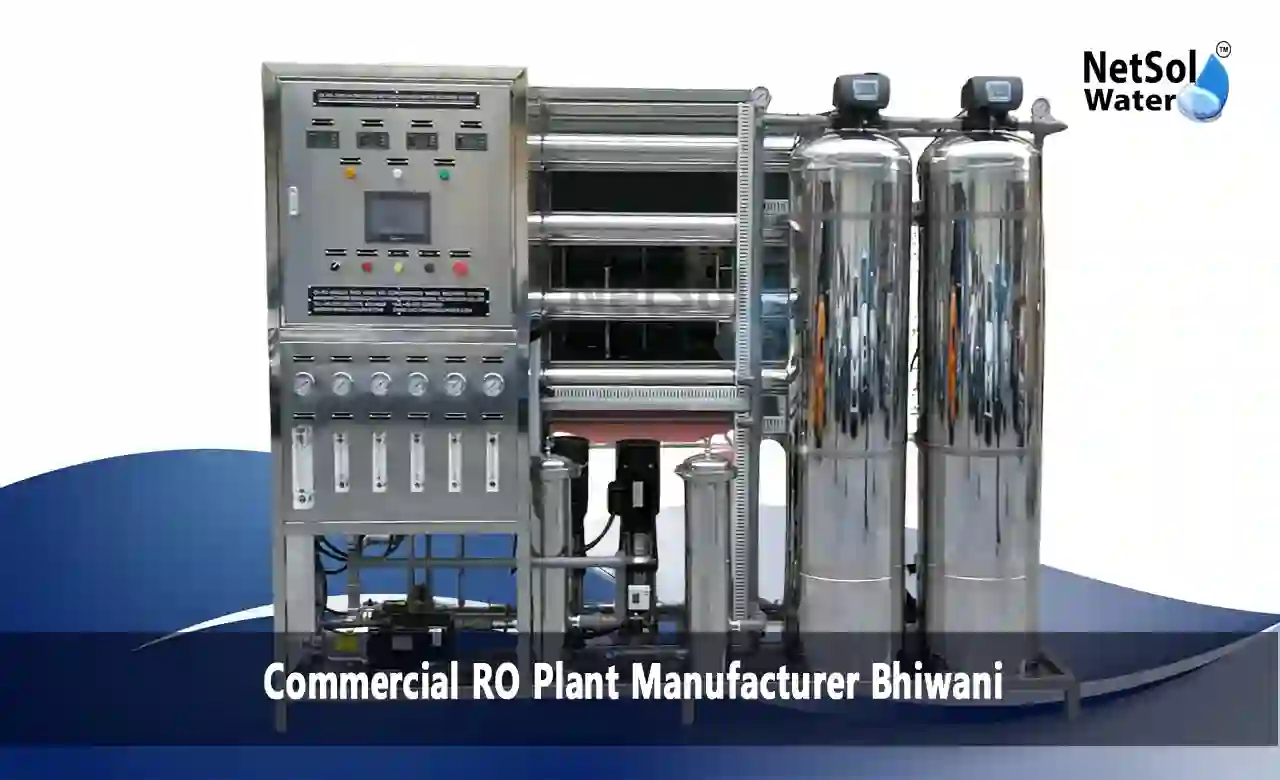
Commercial RO Plant Manufacturer Bhiwani
Anyone who has run a business in Bhiwani long enough knows the water problem firsthand. The groundwater is hard, the TDS is consistently high, and the municipal supply is neither reliable nor clean enough for commercial use. Hotels, hospitals, schools, food processing units, and dairy facilities in Bhiwani spend significant money every month just arranging water that is safe to use.
The solution is not complicated. A Commercial RO Plant installed at your premises solves the problem permanently. You get clean water on demand - at a fraction of what you currently spend on tankers, packaged water, or unreliable municipal connections - every single day.
The real question is not whether you need one. It is which Commercial RO Plant manufacturer in Bhiwani you trust to build it correctly for your specific application.
The Water Quality Reality in Bhiwani
1. TDS Levels That Make Water Unusable
Studies and government water quality surveys have consistently recorded TDS levels between 800 and 2500 mg per litre in multiple areas of Bhiwani. The BIS permissible limit for drinking water is 500 mg per litre. Many areas in Bhiwani have groundwater TDS three to five times this limit. At these concentrations, water tastes distinctly unpleasant, leaves mineral deposits on every surface it contacts, and causes progressive damage to any equipment it flows through regularly.
2. Fluoride Contamination
Fluoride in Bhiwani groundwater frequently exceeds the permissible limit of 1.5 mg per litre. For schools and hospitals where large numbers of people consume the same water daily, chronic fluoride exposure at elevated levels causes dental fluorosis, skeletal damage, and long-term organ stress. This is a genuine public health risk that institutional operators have a responsibility to address.
3. Hardness and Its Operational Consequences
High water hardness in Bhiwani creates operational problems across every commercial sector. In hotel and restaurant kitchens, scale builds inside kettles, water heaters, and cooking equipment - reducing efficiency, increasing energy costs, and shortening equipment life. In hospitals, hard water interferes with sterilization processes. In food processing, it creates quality control problems. The operational cost of hard water is real and cumulative.
4. Nitrate and Heavy Metal Contamination
Agricultural activity around Bhiwani has elevated nitrate levels in shallow groundwater in multiple pockets of the district. For food and beverage businesses, hospitals, and schools, elevated nitrates create direct health risks and regulatory compliance concerns. Heavy metal contamination, while less widespread, has been recorded in specific Bhiwani localities near industrial areas.
What a Commercial RO Plant Does - The Complete Process
1. Raw Water Storage and Intake
Water from your borewell or municipal supply enters a raw water storage tank. This buffers supply intermittency, ensuring your treatment system always has a consistent water source regardless of fluctuations in your borewell or municipal connection. The tank also allows initial sedimentation of coarse particles.
2. Pre-Filtration - The Stage That Determines Membrane Life
Pre-filtration is where the long-term performance of a Commercial RO Plant in Bhiwani is determined. A pressure sand filter removes suspended solids and turbidity. An activated carbon filter removes chlorine, organic compounds, and odour - chlorine in any concentration destroys RO membranes. Given Bhiwani's high hardness, anti-scalant dosing or water softening is integrated at this stage to prevent scale accumulation on membrane surfaces. A final micron cartridge filter catches any remaining fine particles before water reaches the membrane.
3. Reverse Osmosis Membrane Filtration
High-pressure pumps force pre-treated water through semi-permeable RO membranes, rejecting dissolved salts, heavy metals, fluoride, nitrates, and bacteria with rejection rates of 95 to 99 percent. Output TDS typically drops below 50 mg per litre. This permeate is then blended to a healthy range of 150 to 200 mg per litre before storage - removing contamination while maintaining palatable mineral balance.
4. Post-Treatment Disinfection
UV sterilization or ozone treatment after the membrane stage eliminates any remaining bacteria or viruses. This is particularly important for hospitals, dairy units, and food processing operations where pathogen control is a regulatory requirement. UV disinfection adds no chemicals and leaves no residue in the treated water.
5. Storage and Distribution
Purified water is stored in food-grade tanks and distributed across your facility through a pressurized piping network. Modern commercial RO systems include automated controls, TDS monitors, pressure gauges, and alert systems that notify operators when maintenance is due - eliminating the need for manual monitoring while ensuring consistent output quality.
Commercial Sectors in Bhiwani That Need RO Plants
1. Hotels and Restaurants
Water quality affects every aspect of hospitality - the taste of food and beverages, the hygiene of cooking surfaces and dishware, the performance of kitchen equipment, and the experience guests associate with your establishment. High-TDS or hard water in a hotel kitchen creates problems that no amount of cleaning protocol can fully overcome. A Commercial RO Plant delivers consistent water quality that protects both operations and guest experience.
2. Hospitals and Healthcare Facilities
Healthcare is the sector where water quality mistakes are most consequential. Sterilization, patient care procedures, pharmaceutical preparation, and dialysis all require treated water that meets strict purity requirements. Hospitals in Bhiwani operating on untreated or poorly treated groundwater face real clinical risk. The investment in a properly designed Commercial RO Plant is a patient safety measure, not just an operational expense.
3. Schools and Educational Institutions
Schools face both a responsibility and a regulatory obligation to provide students with safe drinking water. Bhiwani's groundwater, with elevated fluoride and TDS, is not safe for daily consumption without treatment - particularly for children, who are more vulnerable to fluoride toxicity. Campus-wide RO systems are more cost-effective and reliable than packaged water delivery at any meaningful scale.
4. Dairy Units and Food Processing Facilities
Food safety regulations under FSSAI require that water used in food production meets specific quality standards. Hard or contaminated water in dairy operations affects product taste and shelf life, creates FSSAI compliance violations, and damages processing equipment. A Commercial RO Plant is not optional for FSSAI-regulated food businesses in Bhiwani - it is a compliance requirement.
5. Bottled Water and Water ATM Operators
For businesses whose core product is purified water, the Commercial RO Plant is the production system. The entire business depends on it performing consistently. System quality, membrane reliability, and after-sales support directly determine whether the business can operate profitably and legally.
How to Evaluate a Commercial RO Plant Manufacturer in Bhiwani
1. Water Testing Before System Design
This is non-negotiable. A manufacturer who designs your system without testing your source water is guessing at your water quality profile. The system design - pre-treatment configuration, membrane selection, recovery rate, anti-scalant dosing - must be based on actual water quality data from your specific borewell or supply source.
2. Membrane Brand Transparency
Ask any manufacturer which brand of RO membrane they use. Industry standard brands include Dow Filmtec, Toray, and Hydranautics. If a manufacturer is reluctant to name the membrane brand, or uses generic terms without documented performance specifications, that is a significant red flag.
3. Recovery Rate
A properly designed commercial RO system should recover 60 to 75 percent of input water as purified output. Systems that only recover 40 percent waste 30 to 40 percent more water than necessary - a significant cost in Bhiwani's water-scarce environment and a sign of inadequate system design.
4. After-Sales Service Capability
Get specific answers: How quickly can the manufacturer dispatch a technician to Bhiwani? What does their AMC cover? Are membrane replacement costs included or charged separately? What is their track record of service response time in Haryana? AMC terms should be in writing before you commit to any purchase.
About NetSol Water - Commercial RO Plant Manufacturer in Bhiwani
NetSol Water is an ISO certified Commercial RO Plant Manufacturer and Supplier in Haryana. We design, manufacture, and install commercial RO plants for hotels, schools, hospitals, dairies, bottled water businesses, and commercial institutions across Haryana, Uttar Pradesh, Delhi NCR, and Rajasthan.
Every system we build starts with a site visit and water quality test. Capacity, pre-treatment configuration, membrane selection, and post-treatment are all determined by your specific water source and usage requirements. We have worked on Bhiwani sites with TDS above 2500 mg per litre and fluoride well above safe limits - the water challenges here are not new to us.
• ISO certified manufacturer with installations across commercial sectors in Haryana
• Globally trusted membrane brands with verified performance ratings
• Pre-treatment designed specifically for Bhiwani's high-TDS and high-hardness water conditions
• Full AMC support with scheduled maintenance and rapid breakdown response
• Transparent component-level pricing - you know exactly what you are buying
• In-house installation team - no subcontracting of commissioning work
Frequently Asked Questions (FAQ)
Q: Why does Bhiwani specifically need Commercial RO Plants?
A: Bhiwani groundwater has TDS levels between 800 and 2500 mg/L in many areas - three to five times the BIS safe drinking limit of 500 mg/L. It also contains elevated fluoride, high hardness, and nitrate contamination. Commercial establishments cannot use this water safely without treatment. A Commercial RO Plant solves all these issues permanently.
Q: What types of businesses in Bhiwani need a Commercial RO Plant?
A: Hotels, restaurants, hospitals and clinics, schools and colleges, dairy units, food processing facilities, textile operations, bottled water businesses, water ATM operators, and commercial offices in Bhiwani all need treated water that meets quality standards for their specific application.
Q: What capacity Commercial RO Plant is right for my business in Bhiwani?
A: Capacity depends on your daily water usage and peak demand. A restaurant typically needs 200 to 500 LPH. A medium hotel needs 500 to 1500 LPH. A school with 1000 students needs 800 to 1200 LPH. A hospital depends on bed count and procedures. NetSol Water calculates the right capacity based on your actual daily and peak demand data.
Q: What is the payback period for a Commercial RO Plant in Bhiwani?
A: In most commercial settings in Bhiwani, a properly designed Commercial RO Plant pays for itself within 12 to 18 months through savings on water tanker costs, packaged water procurement, and reduced equipment maintenance. After payback, the system delivers net savings for the next 10 to 15 years of operation.
Q: How does pre-treatment affect Commercial RO Plant performance in Bhiwani?
A: Bhiwani's high TDS and hardness make pre-treatment quality critical. Sand filtration removes suspended solids, activated carbon removes chlorine, and anti-scalant dosing prevents membrane scaling. Without proper pre-treatment, membranes in Bhiwani conditions can foul within 6 to 12 months instead of lasting 3 to 5 years as designed.
Q: What membrane brands should a Commercial RO Plant use?
A: Industry-standard membranes come from brands like Dow Filmtec, Toray, and Hydranautics. These brands have documented performance ratings and rejection data. A manufacturer who cannot specify their membrane brand or provides a vague answer about membrane sourcing is a red flag - membrane quality directly determines system performance and lifespan.
Q: Is the water from a Commercial RO Plant safe for drinking and cooking?
A: Yes. A properly designed Commercial RO Plant produces water with TDS below 200 mg/L after blending, free of dissolved salts, heavy metals, fluoride, nitrates, and bacteria. This water meets BIS standards for drinking water and is suitable for cooking, beverage preparation, and all food service applications.
Q: Does NetSol Water test water before designing Commercial RO Plants in Bhiwani?
A: Yes, always. NetSol Water conducts a comprehensive water quality analysis of your source water before designing any system. We measure TDS, hardness, fluoride, nitrate, pH, and microbial parameters. The system we propose is engineered around your actual water conditions - not a generic specification.